•
Exposed paper nests
Report the approximate size, height and nearby doors or walkways without approaching or disturbing the nest.

EnviroGreen assesses wasp and hornet activity around Surrey homes and businesses, including exposed nests, repeated flights into soffits or wall gaps and ground-level activity. The insect, nest location, height and access conditions determine whether treatment, removal or another response is appropriate.

EnviroGreen assesses wasp and hornet activity around Surrey homes and businesses, including exposed nests, repeated flights into soffits or wall gaps and ground-level activity. The insect, nest location, height and access conditions determine whether treatment, removal or another response is appropriate.
A visible paper nest is different from a concealed nest inside a wall or roofline. Repeated flights to one opening can be useful evidence even when the nest itself is not visible. Keep people and pets away and do not seal an active entrance before receiving advice.
EnviroGreen reviews the reported insect and practical access to the nesting area. Physical nest removal is not suitable or possible in every location, so the service plan should explain treatment, expected activity afterward and when follow-up is needed.
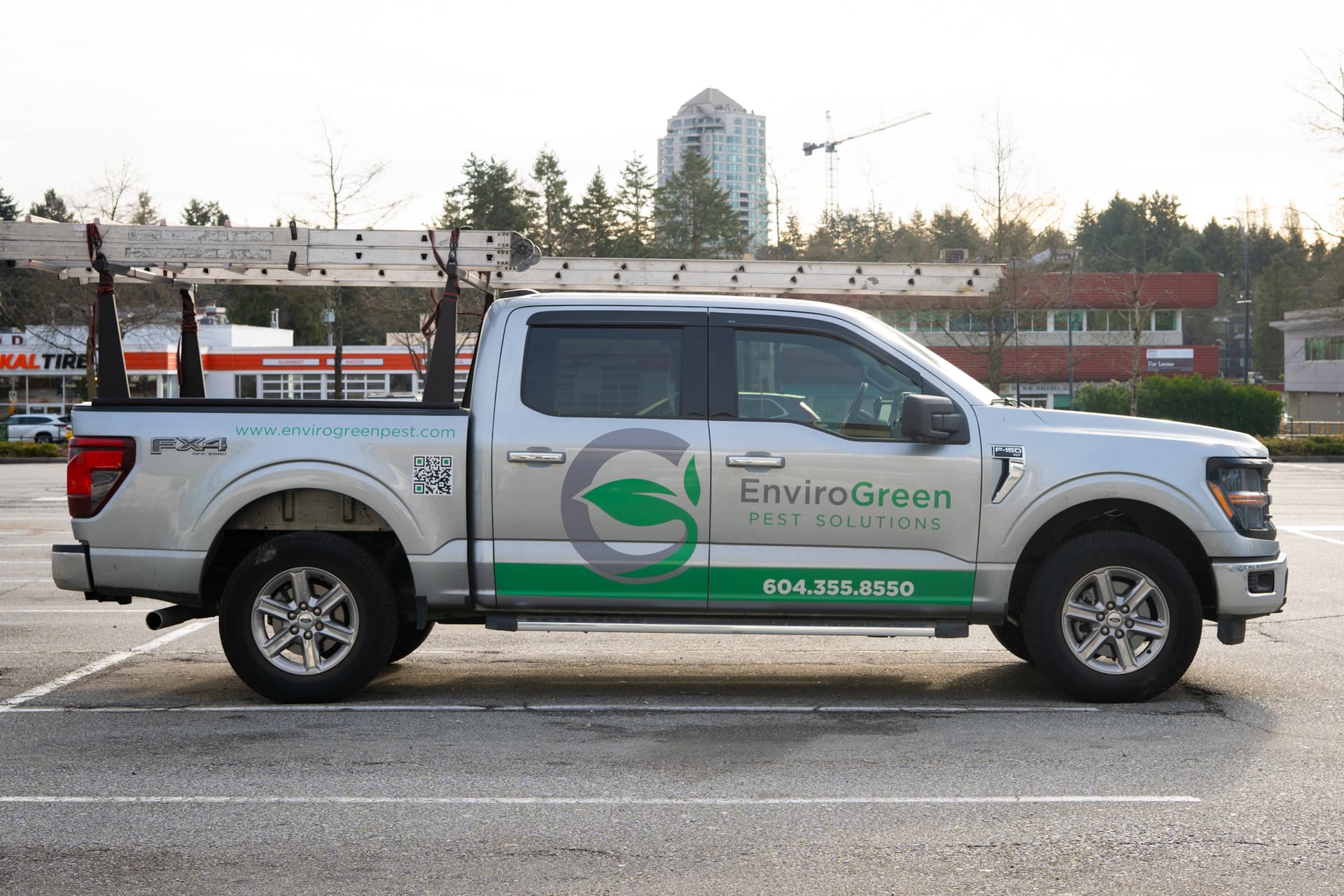
Correct identification and an understanding of the property help determine the appropriate response.
Report the approximate size, height and nearby doors or walkways without approaching or disturbing the nest.
Repeated traffic at one soffit, vent, wall gap or deck opening may indicate concealed nesting activity.
Mark the general area from a safe distance and restrict foot traffic, children and pets until it is assessed.
The first visit is used to identify the pest and the conditions supporting it. Treatment and monitoring then focus on the confirmed activity, while prevention recommendations address the routes and resources that could allow the problem to continue.
No—not before the activity is assessed. Blocking an active entrance can force insects to seek another route, including toward occupied areas. The technician should first determine the nest location, treatment access and the correct timing for any repair.
A safe-distance photo or description helps distinguish wasps or hornets from bees and other flying insects.
Height, ladders, rooflines, landscaping and proximity to occupied spaces are considered before service.
The team explains what was treated, whether removal is appropriate and what activity should be reported afterward.
Ask which areas need treatment, what preparation is required and how any follow-up will be arranged. Timing and cost depend on the identified pest, access and extent of activity. Follow the instructions provided for your property and report new evidence with its date and location.
No. Removal depends on access, nest type, activity and the treatment plan. Concealed nests may not be physically reachable without opening the structure.
Yes, if it can be taken safely without approaching the insects. Do not put yourself at risk to obtain an image.
Do not assume a wasp treatment is appropriate for bees. Contact the team for identification and to confirm whether treatment, a beekeeper or another referral is suitable.
These government resources provide additional identification, prevention and safe-use guidance. They are general information and do not replace a site assessment.
Tell us what you are seeing and where the activity is occurring. Our team will help determine the appropriate next step.